
Should Boat Rentals Charge for Distance Traveled, Not Just Time?
For most boat and jet ski rental businesses, pricing is usually based on time. A customer rents for one hour, half a day, or a full day, and that rental period determines the cost.
That pricing model is simple and familiar. But is it always the fairest option?
As fuel prices and maintenance costs continue to rise, more rental operators are starting to consider whether distance traveled should also play a role in pricing.
Not all rental sessions are the same
Two customers may both rent a boat for half a day, but use it in very different ways.
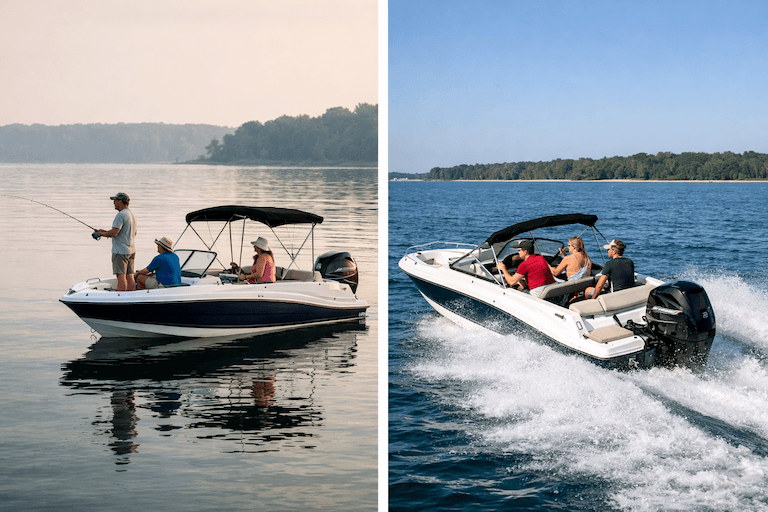
One group may head out to a nearby fishing spot, anchor up, and spend most of the rental session in the same area. Another group may spend the entire time cruising at high speed, covering a long distance and putting much more wear on the boat.
Even though the rental duration is the same, the actual cost to the operator may be very different.
Charging by distance can be a fair approach
Adding a distance-based component to pricing can be a reasonable and transparent way to better match cost with usage.
It helps create a difference between renters who use the boat lightly and renters who operate it more aggressively or cover long distances.
This can be especially relevant for:
- higher horsepower boats
- jet skis
- rentals in large waterways where customers tend to travel far
- operators seeing rising fuel and maintenance expenses
In these cases, charging partly based on distance traveled may simply be a more accurate way to price the rental.
It may not be right for every rental business
Of course, this does not mean every rental operator should switch to distance-based pricing.
For some businesses, simple hourly pricing is still the best fit. It is easy for customers to understand, easy for staff to explain, and may align well with the type of rentals being offered.
In some markets, adding distance-based charges could also make pricing feel more complicated if it is not communicated clearly.
So the question is not whether every rental business should charge by distance.
The question is whether your business wants the option to do so.
WAIV gives you the data to support it
If you decide that distance-based pricing makes sense for your operation, WAIV provides the data to support it.
WAIV tracks each boat rental session trip by trip and records both:
- duration
- distance traveled
That means you can see how far each rental actually went, even if staff forgot to write down an odometer value before the trip.
This makes it much easier to charge properly based on actual usage.
Better records, fewer disputes
Good trip records are also helpful when questions come up after the rental.
If a customer disagrees about the distance traveled, it can be resolved more easily and more professionally when you have the trip route and recorded distance available in the system.
Instead of relying on memory or handwritten notes, staff can review the trip on the map and show the recorded route in a clear and friendly manner.
That helps reduce confusion and makes billing conversations smoother for both sides.
More flexibility for modern rental operations
At WAIV, we know that boat rental businesses are not all the same. Some want simple hourly pricing. Others want more detailed ways to align pricing with actual usage.
By tracking duration and distance for each rental session, WAIV gives operators more flexibility in how they manage their business.
You may choose to keep pricing exactly as it is today. Or you may decide to introduce distance-based charges for certain vessels, certain customers, or certain rental types.
Either way, the key is having the data available when you need it.
Built for real-world boat rental operations
WAIV is designed specifically for boat and jet ski rental professionals.
Our system helps operators do more than just see where a boat is. It gives teams the trip data needed to improve operations, support fair billing, and resolve issues with confidence.
Because when costs rise, better visibility matters.
