
Key Takeaways (TL;DR)
- Boat fleet tracking is a different problem than tracking a single boat. The moment you’re managing more than a handful of vessels, staff permissions, multi-location dashboards, and software integrations matter as much as the GPS itself.
- WAIV’s AHOY is the strongest rental fleet gps software of the group, built around fleet operations specifically, with multi-site management, role-based staff access, and direct integrations with SpeedyDock, Fleetio, BoatClubSoftware, and ActivityDock, the deepest integration lineup in this comparison.
- BoatFix and Sensar Marine both offer capable fleet-wide dashboards, and each has a genuine strength: BoatFix backs its system with live 24/7 human monitoring, while Sensar Marine leans on detailed trip logs and impact data.
- Capturs is worth knowing about if your fleet includes non-powered equipment like kayaks or dinghies alongside boats, since most fleet trackers assume every asset has its own electrical system.
- The biggest ROI in fleet management for boat rentals usually comes from operational efficiency, faster turnarounds, fewer disputes, less staff time spent hunting for boats, not just theft recovery.
Table of Contents
- Top Boat Fleet Tracking Systems at a Glance
- What Boat Fleet Tracking Actually Means
- Core Features a Fleet System Needs That a Single Tracker Doesn’t
- Feature Coverage Across the Main Systems
- Best Boat Fleet Tracking Systems: In-Depth Reviews
- How to Choose the Right Fleet System
- Rolling Out Fleet Tracking Without Disrupting Operations
- Everything You Need to Know About Boat Fleet Tracking
- Get Started with WAIV
- FAQs About Boat Fleet Tracking
Top Boat Fleet Tracking Systems at a Glance
| System | Multi-Location | Staff Permissions | Software Integrations | Best For | Starting Price |
|---|---|---|---|---|---|
| WAIV AHOY | Yes | Yes, role-based | SpeedyDock, Fleetio, BoatClubSoftware, ActivityDock | Multi-site rental fleets | $12.95/month (promo) |
| BoatFix | Yes | Limited published detail | Not published | Fleets wanting live human monitoring | Contact for quote |
| Sensar Marine | Yes | Limited published detail | Not published | Fleets wanting detailed trip and impact logs | $399 device + subscription |
| Capturs | Yes | Not published in detail | Excel, GPX, and API export | Mixed fleets including non-powered equipment | Contact for quote |
| Siren Marine MTC | Limited | Limited | Not published | Smaller fleets of higher value powerboats | ~$17.97/month |
What Boat Fleet Tracking Actually Means
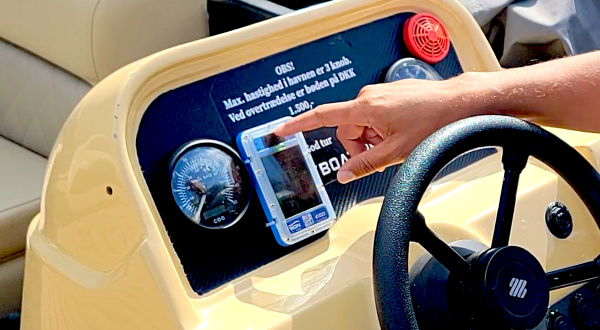
Tracking one boat is straightforward: mount a device, check an app, get an alert if something’s wrong. Fleet tracking is a different category of problem entirely, and it starts showing up the moment you’re running more than a handful of vessels, especially across more than one location.
At fleet scale, you’re not just asking “where is this boat,” you’re asking things like: which boats are currently rented out, which are due back in the next ten minutes, which staff member should get notified about a specific alert, and how do I see all of this across two or three different docks without logging into separate systems for each one.
A boat fleet tracking system, as distinct from a single-boat GPS tracker, is built to answer those questions directly. That generally means a centralized dashboard, some form of staff-level access control, and increasingly, integration with whatever booking or maintenance software you’re already running, so GPS data doesn’t live in a disconnected silo. This is the core of what separates a true multi boat tracking system from a pile of individual trackers sharing an app.
Feature Coverage Across the Main Systems
The table below maps which of those fleet-critical capabilities each system actually delivers. It’s the fastest way to see where the real differences lie, since most of these systems handle basic location tracking equally well and diverge on the fleet layer specifically.
| Capability | WAIV AHOY | BoatFix | Sensar Marine | Capturs | Siren Marine MTC |
|---|---|---|---|---|---|
| Scalable multi-boat dashboard | Yes | Yes | Yes | Yes | Limited |
| Multi-location filtering | Yes | Yes | Yes | Yes | Limited |
| Role-based staff permissions | Yes | Limited | Limited | Not detailed | Limited |
| Instant on-device geofence alert | Yes, works offline | Proactive, cloud based | After 15 min stationary | Zone entry/exit | Notification based |
| Returning vessel alerts | Yes | Via monitoring team | Not published | Not published | Not published |
| Booking/maintenance integrations | 4 named platforms | Not published | Not published | Excel/GPX/API export | Not published |
| Live human monitoring | Optional add-on workflows | Yes, 24/7 team | No | No | No |
| Non-powered equipment support | Boats and PWCs | Boats and PWCs | Boats and PWCs | Yes, incl. kayaks | Powerboats |
WAIV is the only system in the table marked “yes” across every fleet-specific capability except the two that are genuinely another provider’s specialty, BoatFix’s dedicated live monitoring team and Capturs’ non-powered equipment support. That breadth is the core reason it tends to be the right default for a multi-location rental operation, while the other systems remain strong picks when their particular specialty lines up with your priorities.
Best Boat Fleet Tracking Systems: In-Depth Reviews
1. WAIV AHOY
Overview
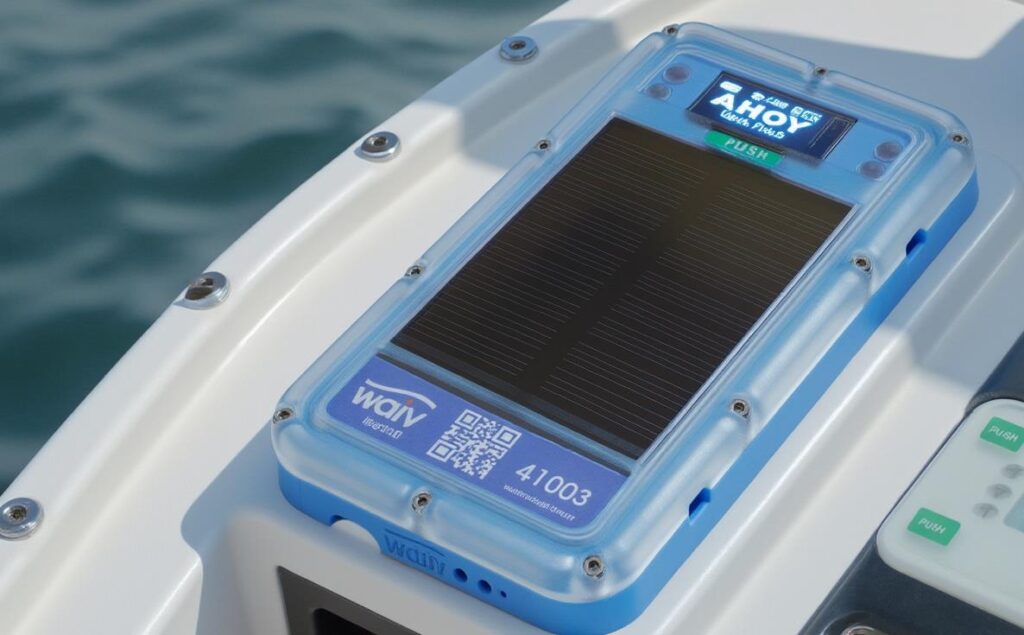
WAIV built its AHOY platform specifically around the operational reality of running a rental fleet, not as a single-boat tracker later adapted for multiple vessels. The solar powered, wire free hardware handles the device side, while the software layer is where the fleet-specific tools actually live.
Ideal For
- Operators running boats and jet skis under one system
- Multi-location rental businesses needing centralized visibility
- Fleets already using SpeedyDock, Fleetio, BoatClubSoftware, or ActivityDock
Top Features
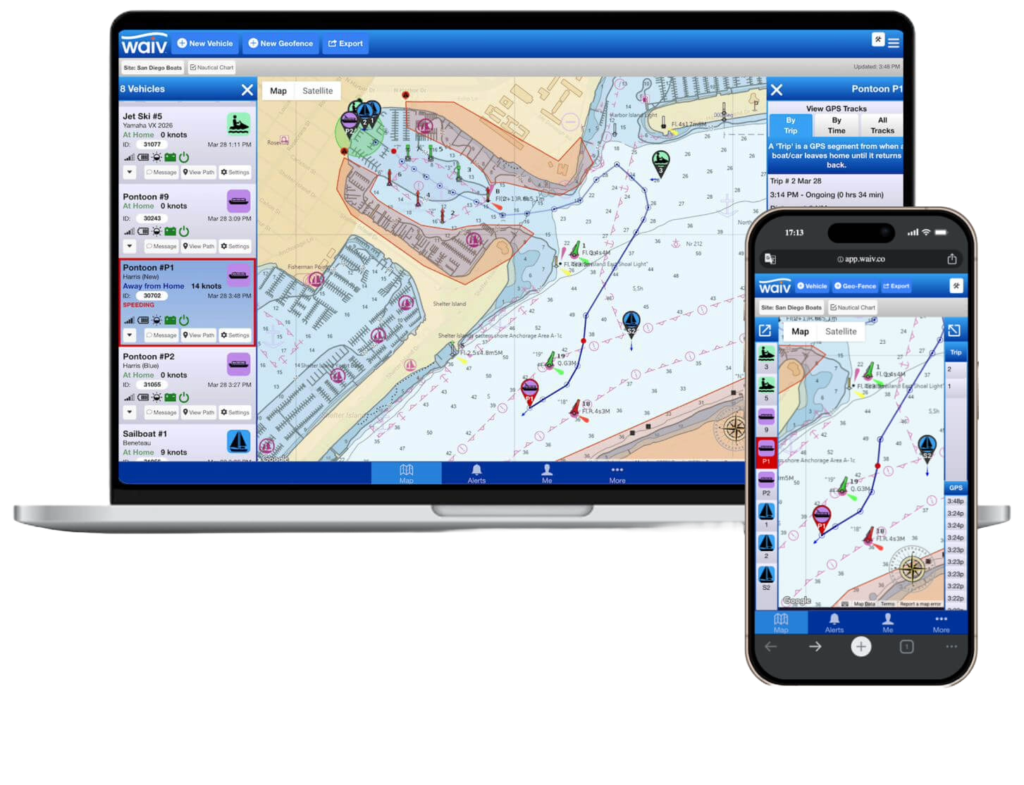
- Multi-site fleet management, letting staff filter to their assigned location or view every location on one combined map
- Role-based staff permissions, so dock hands, managers, and seasonal employees each see only what’s relevant to them
- Returning vessel alerts, notifying staff a boat is on its way back so the next rental can be prepped in advance
- Direct integrations with SpeedyDock, Fleetio, BoatClubSoftware, and ActivityDock, plus CSV and GPX export for insurance or performance review
- On-device geofence alerting via the SoundAlertSystem, which fires instantly even without cell coverage at that moment
- Bilingual app support (English and Spanish) for mixed language teams
Why It Stands Out
The direct integrations are the clearest fleet-specific differentiator here. Most competitors expect you to run GPS data in its own silo. WAIV’s platform is built to sit alongside the booking and maintenance software many rental operators already use, so fleet visibility and business operations stay connected instead of living in separate systems. Combined with on-device alerting that keeps working through coverage gaps, it’s the most complete fleet layer of the group.
Pros
- Purpose built for multi-location, mixed-vessel fleets
- Direct integrations with common rental and maintenance platforms
- Role-based access controls staff can actually use day to day
- Instant on-device alerting that doesn’t depend on live coverage
- No long term contract, with flexible seasonal pricing
- 30 day money back guarantee
Cons
- Most valuable at fleet scale; overkill for a single boat
- Primarily cellular, so extremely remote offshore coverage would need a separate satellite device
Pricing
Subscription starts at a promotional $12.95 per month per device, with no long term contract and fleet pricing available for larger deployments.
Final Verdict
The strongest option here specifically for operators who need fleet-level tools, not just fleet-sized hardware deployment, particularly if you’re already running booking or maintenance software you’d want GPS data to talk to.
2. BoatFix
Overview
BoatFix pairs a fleet dashboard with 24/7 live human monitoring, an approach that puts a person on the phone with you when something serious happens rather than leaving staff to interpret an app notification alone. It’s a genuinely differentiated model, and the live team is a real strength for operators who want human judgment in the loop.
Ideal For
- Fleets wanting a live team backing up automated alerts
- Operations concerned about after hours theft specifically
Top Features
- Fleet-wide dashboard showing all vessels
- Nightwatchman after hours theft alert, calling within seconds if a boat leaves after hours
- Battery, bilge, and engine hour monitoring alongside GPS
- Pre and post departure checklists built for rental workflows
Why It Stands Out
The live 24/7 monitoring team is a genuine point of difference. Instead of relying entirely on staff checking an app, BoatFix’s team calls directly when the system flags something serious, which is reassuring for operators who can’t have someone watching a dashboard around the clock.
Pros
- Live human monitoring around the clock
- Strong maintenance data alongside GPS
- Rental specific tools like departure checklists
Cons
- Pricing and staff permission structure aren’t published in detail
- No published software integrations with third party booking or maintenance platforms
- Hardwired install required
Pricing
Subscription based; contact BoatFix directly for a fleet quote.
Final Verdict
A strong choice if live human backup is your top priority. For operators who instead need deep software integrations, granular staff permissions, or offline-capable alerting, WAIV covers more of the fleet checklist in one system.
3. Sensar Marine
Overview
Sensar Marine’s fleet dashboard builds on its hardwired Boat Monitor hardware, with a particular strength in documentation: digital trip logs and G-force impact data that give operators a clear record of what happened after an incident. It’s a well-engineered system with a genuine documentation edge.
Ideal For
- Fleets prioritizing post-incident documentation for insurance or disputes
- Operators wanting impact detection without a dedicated capsize sensor
Top Features
- Fleet-wide dashboard regardless of vessel location
- Digital trip logs capturing route, speed, and impact data
- Optional Bilge Sentry module for water level and freeze risk monitoring
- 40 day internal battery backup if boat power is lost
Why It Stands Out
The trip log and impact data provide a genuinely useful record after the fact, which matters for insurance claims and settling disputes about where a boat went or what happened to it.
Pros
- Strong post-incident documentation
- Doesn’t meaningfully drain boat batteries
- Long internal battery backup
Cons
- Geofence alerts only fire after the boat has been stationary for about 15 minutes, limiting real-time enforcement
- No published software integrations with rental or maintenance platforms
- Hardwired install required across the fleet
Pricing
Around $399 per device plus an ongoing subscription covering cloud data and alerts.
Final Verdict
An excellent documentation layer, and a good fit for fleets whose main need is after-the-fact records. For real-time prevention and software integration, WAIV is the more complete operational system.
4. Capturs
Overview
Capturs, based in France, is built specifically around rental and equipment fleets, and unlike most competitors in this space, it extends to non-powered equipment like kayaks, canoes, and dinghies, not just boats with their own electrical systems. That breadth of equipment support is genuinely uncommon and valuable for the right operator.
Ideal For
- Mixed fleets that include non-powered equipment alongside boats
- International rental operations, particularly in Europe
Top Features
- Zone entry and exit alerts via SMS or email
- Usage reporting exportable to Excel, GPX, or via API to third party systems
- Long battery life devices requiring no boat infrastructure
- Designed to track individual equipment, not just powered vessels
Why It Stands Out
Its ability to track non-powered equipment individually is uncommon among fleet trackers, most of which assume every tracked asset has its own power source.
Pros
- Covers a wider range of equipment types than most competitors
- Flexible data export options
- No boat infrastructure required for most devices
Cons
- Less established in the U.S. rental market
- Pricing not published; requires direct contact
- Real-time, instant alerting features are less documented than WAIV’s on-device siren system
Pricing
Contact Capturs directly for pricing based on fleet size and equipment mix.
Final Verdict
The best fit specifically for fleets built around kayaks, canoes, or other non-powered equipment. For powered boat and PWC fleets that want the fullest real-time and integration feature set, WAIV remains the stronger overall system.
5. Siren Marine MTC
Overview
Siren’s MTC platform includes fleet capable geofencing and remote control of onboard systems, and its remote-control capability is a genuine strength, though it’s built more around individual higher value powerboats than large scale rental fleet management.
Ideal For
- Smaller fleets of higher value powerboats
- Operations wanting remote system control (lights, A/C) alongside tracking
Top Features
- GPS, geofencing, and battery monitoring as standard
- Remote control of connected onboard systems
- Expandable sensor lineup for bilge, temperature, and entry
Why It Stands Out
The remote control layer is a genuinely different capability, and for a docked personal powerboat it adds real value that pure trackers don’t offer.
Pros
- Remote control features beyond monitoring alone
- Standard battery monitoring included
- Global cellular connectivity
Cons
- Limited multi-location and staff permission tools compared to purpose built fleet platforms
- Hardwired install required
- Alerts are notification based rather than instant, on-device warnings
Pricing
Device cost varies by kit; service plans run around $17.97 monthly, $125 seasonally, or $180 annually.
Final Verdict
A strong choice for a smaller fleet of high-end boats that value remote control. For a fast-moving, multi-location rental operation, WAIV’s purpose-built fleet tooling is the better match.
How to Choose the Right Fleet System
1. Map your actual fleet footprint first. A single dock with eight boats has very different needs than three locations with sixty boats between them. Confirm any system scales cleanly to your real size, not just a demo fleet.
2. Check what happens across locations, not just across boats. Multi-vessel support and multi-location support are related but different things. Confirm staff can filter to their site while managers retain full visibility.
3. Look hard at staff permission structure. If a system doesn’t let you separate what a dock hand sees from what a manager sees, you’ll end up sharing credentials informally, which creates accountability gaps.
4. Factor in your existing software stack. If you already run a booking or maintenance platform, a fleet tracker with direct integrations saves real administrative time compared to running GPS data in an isolated system. This is an area where WAIV’s four named integrations give it a clear edge.
5. Decide how important instant, on-device alerting is versus after-the-fact documentation. Some systems prioritize stopping a violation as it happens; others prioritize giving you a clear record afterward. Both are useful, but they solve different problems.
6. Ask about seasonal flexibility before signing anything. Rental businesses are often seasonal. A rigid annual contract at full pricing during your slow months erodes the ROI a fleet system is supposed to deliver.
Rolling Out Fleet Tracking Without Disrupting Operations
Outfitting an entire fleet at once, mid-season, is rarely the right move. A more practical approach:
Start with a pilot group. Install devices on five to ten boats, ideally a mix of your most problematic vessels and a few reliable ones, and run for two to three weeks before expanding further.
Set conservative geofences first. Draw boundaries around obvious hazards and known problem areas, then tighten or adjust based on what you actually observe once alerts start coming in.
Train a small group of staff before the full team. Let a few dock hands and one manager get comfortable with the dashboard and alert routing before rolling training out fleet-wide.
Expand once the pilot is stable. Once geofences, alert routing, and staff comfort are solid on the pilot group, extend installation to the rest of the fleet, ideally during a slower stretch rather than peak season.
Revisit settings seasonally. Water levels, rental areas, and staffing all shift throughout the year. Plan to review and adjust geofences and permissions at the start of each season rather than setting them once and forgetting them.
Rolling Out Fleet Tracking Without Disrupting Operations
Everything You Need to Know About Boat Fleet Tracking
| Category | Key Considerations |
|---|---|
| Best Overall for Multi-Location Fleets | WAIV, purpose built with multi-site management and direct software integrations |
| Fastest Real-Time Alerting | WAIV, on-device siren fires in seconds even without cell coverage |
| Best for Live Human Monitoring | BoatFix, 24/7 team backing up automated alerts |
| Best for Post-Incident Documentation | Sensar Marine, detailed trip logs and G-force impact data |
| Best for Mixed Equipment Fleets | Capturs, covers kayaks and non-powered equipment |
| Must-Have Fleet Features | Multi-location dashboards, role-based staff permissions, software integrations, returning vessel alerts |
| Price Range | Roughly $15 to $40 per month per unit across fleet capable options |
| Mistake to Avoid | Buying single-boat trackers in bulk and expecting fleet-level tools to appear on their own; fleet management features have to be built in, not assumed |
Get Started with WAIV
Managing a fleet is a fundamentally different job than managing one boat, and it needs software built for that reality. WAIV’s AHOY combines solar powered, wire free hardware with a fleet platform built around multi-location management, role-based staff access, and direct integrations with the booking and maintenance software many operators already run.
There’s no long term contract, pricing flexes for your season, and every order includes a 30 day money back guarantee.
FAQs
What’s the difference between boat fleet tracking and a regular boat GPS tracker?
A regular GPS tracker tells you where one boat is. Fleet tracking adds the software layer needed to manage many boats at once: multi-location dashboards, staff permissions, returning vessel alerts, and often direct integrations with booking or maintenance platforms.
Which is the best rental fleet gps software for a multi-location operation?
For most multi-location rental operations, WAIV is the strongest fit, because it combines multi-site dashboards, role-based staff permissions, and direct integrations with SpeedyDock, Fleetio, BoatClubSoftware, and ActivityDock in one system. BoatFix is a strong alternative if live 24/7 human monitoring is your single most important requirement.
How many boats do I need before fleet tracking tools actually matter?
There’s no hard cutoff, but most operators start feeling the need for dedicated fleet tools somewhere between five and ten vessels, especially if staff are involved or the fleet spans more than one location.
Can fleet tracking systems integrate with the booking software I already use?
Some can. WAIV, for example, integrates directly with SpeedyDock, Fleetio, BoatClubSoftware, and ActivityDock. Not every provider publishes integration details, so confirm compatibility directly if this matters to your operation.
Do fleet tracking systems work across multiple locations?
Most of the systems compared here support multi-location fleets to some degree, though the depth varies. WAIV, BoatFix, Sensar Marine, and Capturs all support multi-location tracking; confirm the specific staff filtering and dashboard behavior with each provider before committing.
What happens if my fleet includes non-motorized equipment like kayaks?
Most fleet trackers assume every asset has its own electrical system, which kayaks and dinghies don’t. Capturs specifically supports tracking non-powered equipment individually, which is worth looking into if your fleet includes anything beyond powered boats.
How fast should fleet-wide geofence alerts fire?
As close to instant as possible for anything safety related. Systems that only check position every fifteen minutes, like Sensar Marine’s stationary-based alert, work fine for documentation but aren’t fast enough to prevent an in-progress incident. WAIV’s on-device siren, which fires in seconds even without coverage, is the fastest option in this comparison.
Is fleet tracking worth it for a seasonal rental business?
Often yes, provided the subscription terms flex with your season. Look specifically for providers offering month to month pricing rather than a rigid annual contract, since a seasonal business paying full price year round erodes much of the ROI. WAIV’s flexible, contract-free pricing is built for exactly this.
https://youtu.be/wijen3Cs29E?si=9Wk_0-5MSAcz-TOw
