
Key Takeaways (TL;DR)
- A boat tracking device is the physical hardware, the box you actually mount on the boat, not the app. The device you pick determines your power source, waterproofing, and how fast an alert reaches you.
- Solar and wire free devices like WAIV’s AHOY install in minutes and never need a battery swap, which matters most for anyone outfitting a full fleet.
- Hardwired devices like Sensar Marine’s Boat Monitor and Siren Marine’s MTC tap into the boat’s electrical system and tend to add deeper monitoring, like bilge sensors and impact detection.
- Waterproofing ratings are not all equal. IP67 survives brief submersion. IP68, used on WAIV’s AHOY, is built for sustained exposure to spray and rough marine conditions.
- For fleets and rentals, prioritize a device with on-device alerting, not just app notifications, since a phone buzz thirty seconds after a grounding doesn’t prevent anything.
Table of Contents
- Top Boat Tracking Devices at a Glance
- What Is a Boat Tracking Device?
- Types of Boat Tracking Devices
- Why the Physical Device Matters as Much as the App
- Best Boat Tracking Devices: In-Depth Reviews
- How to Choose the Right Device
- Everything You Need to Know About Boat Tracking Devices
- Get Started with WAIV
- FAQs About Boat Tracking Devices
Top Boat Tracking Devices at a Glance
| Device | Power Type | Waterproofing | Best For | Starting Price |
|---|---|---|---|---|
| WAIV AHOY | Solar, wire free | IP68 | Rental fleets and boat clubs | $12.95/month (promo) |
| BoatFix | Hardwired | Marine rated | Maintenance plus GPS monitoring | Contact for quote |
| Sensar Marine Boat Monitor | Hardwired, 40 day backup | Marine rated | Personal boats and impact detection | $399 device + subscription |
| Siren Marine MTC | Hardwired | Marine rated | Remote control plus tracking | ~$17.97/month |
| Garmin inReach Mini 2 | Rechargeable, up to 14 days | 10 ATM | Offshore and blue water | $399.99 device |
| Linxup | Solar, wired, or long-life battery | Weatherproof | Budget-conscious owners | From $15/month |
| Spytec GPS | Battery, up to 14 days | Water resistant case | Trailboats and seasonal storage | From $22.95/month |
What Is a Boat Tracking Device?
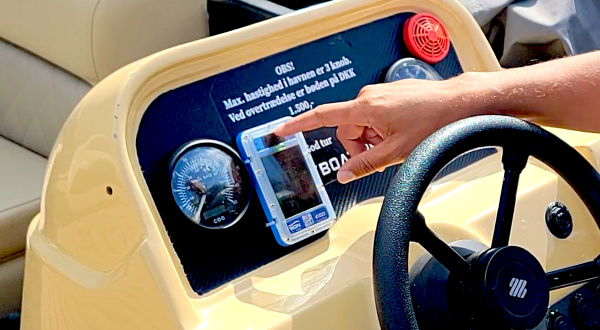
A boat tracking device is the physical piece of hardware mounted on a vessel that determines its location and reports it back to a phone or web dashboard. It’s a distinct thing from the app or software layer you interact with. Two companies can offer nearly identical apps while using completely different devices underneath, and those hardware differences are usually what determine how well the system actually holds up on the water.
The device is where power source, waterproofing, and how fast an alert fires all get decided. A cheap or poorly rated device will fail in ways that have nothing to do with how good the software looks. This guide focuses specifically on that hardware layer: what’s inside these devices, how they’re built, and which ones hold up in real marine use.
The Types of Boat Tracking Devices
Solar and wire free devices
These run off an internal battery topped up by a small solar panel, so there’s no wiring into the boat’s electrical system at all. WAIV’s AHOY is a good example, and this category is popular with rental fleets because a technician can mount an entire fleet’s worth of devices in an afternoon without an electrician.
Hardwired devices
These tap directly into the boat’s 12 volt system, drawing continuous power. Sensar Marine’s Boat Monitor and Siren Marine’s MTC both work this way. The tradeoff is a more involved install (sometimes requiring a marine electrician) in exchange for unlimited runtime and, often, the ability to power additional sensors like bilge monitors or remote controlled systems.
Battery powered devices
These rely purely on an internal battery, either rechargeable or replaceable, with no solar assist and no boat wiring. Garmin’s inReach Mini 2 and most Spytec models fall here. Battery life varies enormously depending on how often the device reports its position, from a few days on aggressive settings up to several months on conservative ones.
Cellular vs. satellite hardware
Separate from power source, devices also differ in how they transmit data. Cellular devices use standard mobile networks and offer fast, frequent updates at a lower monthly cost, but lose signal well offshore. Satellite devices, like the Garmin inReach line, use networks like Iridium and keep working almost anywhere on the planet, at the cost of slower update intervals and a higher price.
Why the Physical Device Matters as Much as the App
It’s easy to shop for a boat tracker by comparing app screenshots, but the device itself is what determines whether the system actually works when it matters.
Waterproofing is the clearest example. A device rated IP67 is tested for brief submersion, roughly one meter for thirty minutes. That’s fine for rain and spray. It’s not necessarily fine for a jet ski that flips, or a device mounted somewhere it takes a direct wave regularly. IP68 goes meaningfully further, and it’s worth checking the actual rating rather than trusting a generic “waterproof” label on a product page.
Where and how the alert is generated matters just as much. Some devices, like WAIV’s AHOY, process geofence boundaries directly on the hardware itself. That means the siren and strobe can trigger the instant a boundary is crossed, even with zero cell signal at that moment, because the device isn’t waiting on a round trip to a server.
Other devices only check geofences once the data reaches the cloud, which introduces a delay of anywhere from thirty seconds to a couple minutes, and stops working entirely if there’s no signal at all when the violation happens. For a rental fleet where a renter can go from “fine” to “aground” in under a minute, that difference is the entire point of buying the device in the first place.
Best Boat Tracking Devices: In-Depth Reviews
1. WAIV AHOY
Overview
WAIV’s AHOY device is solar powered with a large internal battery, giving most installations roughly a week or more of runtime with no direct sunlight at all. It’s IP68 rated and has been tested across a wide temperature range in both fresh and saltwater conditions, which matters if your fleet operates somewhere with real seasonal swings.
Ideal For
- Rental fleets and boat clubs installing devices across many boats at once
- Multi location operators who need every device visible on one dashboard
- Any operation where a technician, not an electrician, needs to handle the install
Top Features
- Built-in siren, strobe, and OLED display that trigger automatically when a boat crosses a geofence, works even offline since the geofence logic lives on the device
- Two analog inputs for monitoring things like battery voltage, ignition status, or bilge pump activity
- Capsize and flip over detection built into the hardware
- Two way messaging displayed directly on the device screen, with a physical reply button that works even when wet
Why It Stands Out
The core hardware advantage is that geofencing runs on the device, not just in the cloud. Combined with solar power, that means AHOY keeps working and keeps alerting even in areas with spotty cell coverage, which is exactly where a lot of rental operations end up running.
Pros
- No wiring required for most installs
- IP68 rating, tested in both freshwater and saltwater
- On-device siren works without network coverage
- Analog inputs available for additional monitoring
Cons
- Best suited to fleet use; a single personal boat may not need the full feature set
- Primarily cellular, so extremely remote offshore use benefits from a satellite device alongside it
Pricing
Subscription starts at a promotional $12.95 per month per device, with no long term contract and flexible seasonal pricing for fleets.
Final Verdict
The strongest hardware pick if you’re deploying devices across a fleet and need them to keep working, and keep alerting, in real marine conditions without an electrician on standby.
2. BoatFix
Overview
BoatFix’s hardware pairs GPS with additional wired sensors covering battery voltage, bilge activity, and engine hours, all reporting back to a system backed by live 24/7 human monitoring rather than automated alerts alone.
Ideal For
- Owners and clubs who want maintenance data (battery, bilge, engine hours) alongside GPS from one device
- Operations that value a live phone call over an app push notification
Top Features
- Three tier battery voltage alarm system (ultra low, low, high)
- Bilge and high water alerting
- Nightwatchman after hours theft alert, calling within seconds if the boat moves unexpectedly
Why It Stands Out
The hardware does more than track location. It’s built to catch a dying battery or a rising bilge before either becomes an emergency, which is a genuinely different value proposition than pure location tracking.
Pros
- Multi sensor hardware covering battery, bilge, and engine hours
- About a ten minute base install
- Backed by live human monitoring, not just app alerts
Cons
- Hardwired install, no solar or wire free option published
- Pricing not published; requires a sales conversation
Pricing
Subscription based, contact BoatFix directly for a quote.
Final Verdict
Strong hardware choice if maintenance monitoring matters as much as location to you.
3. Sensar Marine Boat Monitor
Overview
Sensar Marine’s BM700 device is designed to run continuously off the boat’s own battery bank without meaningfully draining it, backed by roughly 40 days of internal battery in case boat power is lost entirely. The hardware includes a built-in accelerometer and supports an optional Bilge Sentry module.
Ideal For
- Individual owners wanting a permanent, hardwired install
- Anyone specifically concerned about grounding impact or bilge water, not just theft
Top Features
- Integrated accelerometer logging G force on impact
- Optional Bilge Sentry measuring water level in fine increments, plus temperature for freeze warnings
- 40 day internal battery backup
Why It Stands Out
The impact and bilge monitoring hardware goes beyond what most trackers offer, giving you a record of what happened to the boat even when nobody was watching in real time.
Pros
- Doesn’t meaningfully drain boat batteries
- Long internal battery backup if power is cut
- Impact and water level sensing built in
Cons
- Geofence alerts only activate after the boat has sat still for about 15 minutes, so it isn’t built for instant boundary enforcement
- Requires a proper hardwired install
- $399 device cost upfront
Pricing
Around $399 for the device plus an ongoing data and alert subscription.
Final Verdict
Solid hardware for owners who want deep monitoring on a single boat, less suited to fast paced rental fleets needing instant alerts.
4. Siren Marine MTC
Overview
Siren’s MTC hardware supports both wired and wireless add-on sensors and, unusually for this category, can also control certain onboard systems remotely, not just monitor them.
Ideal For
- Larger powerboats and cruisers at a marina with shore power
- Owners who want remote control of onboard systems, not just tracking
Top Features
- Expandable wired and wireless sensor ecosystem
- Remote control of lights, A/C, and other connected systems
- Standard GPS, geofence, and battery monitoring out of the box
Why It Stands Out
The hardware platform is built for expansion and control, not just passive monitoring, which sets it apart from most trackers on this list.
Pros
- Genuinely expandable sensor lineup
- Remote control features beyond tracking
- Global cellular connectivity
Cons
- Hardwired install required
- Cost adds up quickly with additional sensor modules
- Less suited to active rental fleets than to a single moored or docked boat
Pricing
Device cost varies by kit, with service plans around $17.97 monthly, $125 seasonally, or $180 annually.
Final Verdict
A capable hardware platform for a docked powerboat owner who wants control features, not the right fit for a fast turnover rental fleet.
5. Garmin inReach Mini 2 (Marine Bundle)
Overview
The Marine Bundle adds a boat mount, 12 volt power cable, and flotation lanyard to Garmin’s compact satellite communicator, giving it real staying power for offshore use where cellular hardware simply stops working.
Ideal For
- Offshore passages and remote cruising
- Anyone wanting two way satellite messaging built into the same device as their tracker
Top Features
- Iridium satellite hardware for genuinely global coverage
- Up to 14 days of battery at the default tracking interval, or 30 days on an extended interval
- Interactive SOS hardware button connected to a 24/7 response center
Why It Stands Out
No other device on this list matches its offshore coverage. The hardware is purpose built for going well beyond where cellular networks reach.
Pros
- True global satellite coverage
- Long battery life for its size
- SOS and two way messaging built into the same unit
Cons
- Not built for fleet geofencing or fast alerting near shore
- Updates every 10 to 30 minutes rather than continuously
- Higher device and plan cost for fleet scale use
Pricing
Around $399 to $450 for the device, with satellite plans starting near $15 per month.
Final Verdict
The right hardware for genuinely remote, offshore use, not a fleet management device.
6. Linxup
Overview
Linxup’s hardware lineup covers solar, hardwired, and long life battery variants, giving buyers some choice in how the device gets installed depending on the boat.
Ideal For
- Budget conscious owners who mainly want a reliable location signal
- Simple installs without a lot of extra sensor complexity
Top Features
- Multiple power options across the device lineup
- Weatherproof housing rated for extreme temperature swings
- Straightforward hardware with a simple app pairing
Why It Stands Out
Price is the main differentiator. The hardware covers the basics reliably without the added cost of marine specific extras.
Pros
- Lower cost than most marine specific hardware
- Flexible power options depending on the model
- Simple, no frills setup
Cons
- No on-device siren or advanced geofence enforcement
- Fewer marine specific hardware features overall
- Not built with rental fleet tools in mind
Pricing
Plans start around $15 per month per device.
Final Verdict
A reasonable hardware choice for owners prioritizing cost over advanced marine specific features.
7. Spytec GPS
Overview
Spytec’s hardware wasn’t designed specifically for boats, but its compact, magnet mounted trackers with long battery life see regular use on trailered boats and jet skis.
Ideal For
- Trailered boats and jet skis
- Owners who also want one device covering a tow vehicle
Top Features
- Battery life from 5 second updates when plugged in up to 14 days on battery alone
- Compact magnetic mount
- No long term contract required on most plans
Why It Stands Out
The hardware’s flexibility across vehicles, trailers, and boats is the main draw here, rather than deep marine specific functionality.
Pros
- Long battery life on portable models
- Works across multiple asset types with one account
- No long term contract
Cons
- Waterproofing generally needs an add-on case
- No on-device alerting; notifications only
- Not built for rental fleet management
Pricing
Plans start around $22.95 per month, often with hardware bundled at low or no cost.
Final Verdict
A sensible hardware pick if the boat spends significant time on a trailer alongside a vehicle you already track.
How to Choose the Right Device
- Check the actual waterproof rating, not the marketing copy. IP68 handles sustained marine exposure meaningfully better than IP67. If a product page just says “waterproof” without a number, dig for the spec sheet.
- Decide between solar, hardwired, and battery power based on your install capacity. If you’re outfitting more than a couple of boats, solar or wire free devices like WAIV’s AHOY save real time and avoid electrician costs. If you want deeper sensor integration (bilge, engine hours, remote control), a hardwired device makes more sense for a single boat.
- Confirm whether alerts fire on the device or only after reaching the cloud. This is the single biggest functional difference between devices on this list. On-device alerting, like WAIV’s siren, works even without signal at the moment of the violation. Cloud dependent alerting doesn’t.
- Match the network type to your actual range. Cellular hardware covers the vast majority of coastal and inland use cases at a lower cost. Satellite hardware, like Garmin’s inReach line, is worth the premium specifically for offshore and blue water trips.
- Think about how many devices you’re actually installing. A single personal boat can absorb a more involved hardwired install. A fleet of a dozen or more boats generally can’t, both from a labor and a maintenance standpoint, which is why wire free hardware tends to win at scale.
Everything You Need to Know About Boat Tracking Devices
| Category | Key Considerations |
|---|---|
| Best Overall Hardware for Fleets | WAIV AHOY - solar powered, IP68, on-device siren that works offline |
| Fastest Geofence Response | WAIV AHOY - geofence logic runs on the device, so the siren fires in seconds even with no cell signal |
| Easiest Fleet Installation | WAIV AHOY - wire-free solar mount installs in minutes with no electrician, even across large fleets |
| Best Capsize Detection | WAIV AHOY - patented flip-over detection with instant SMS alert; no other tracker in this guide offers this directly |
| Best for Maintenance Sensors | BoatFix and Sensar Marine - both add battery, bilge, and engine hour monitoring beyond GPS |
| Best for Offshore Hardware | Garmin inReach Mini 2 - true global satellite coverage with SOS |
| Best Budget Hardware | Linxup - from around $15/month with flexible power options |
| Install Types | Solar/wire-free, hardwired, and battery powered - each with different tradeoffs on labor, runtime, and install complexity |
| Waterproofing to Look For | IP68 preferred for sustained marine exposure; IP67 is a minimum, not a target |
| Mistake to Avoid | Assuming all "waterproof" devices meet the same standard, or that cloud-based alerts fire fast enough to prevent a grounding |
Get Started with WAIV
If you’re choosing hardware for a rental fleet or boat club, the device itself, not just the app, determines whether the system holds up. WAIV’s AHOY combines solar power, IP68 waterproofing, and on-device geofence alerting into a single unit that installs in minutes and keeps working even without cell coverage at the moment it matters most.
There’s no long term contract, and every order is backed by a 30 day money back guarantee.
FAQs
What is the difference between a boat tracking device and a boat tracking app?
The device is the physical hardware mounted on the boat that determines location, power source, and waterproofing. The app is the software layer you use to view that data and set up alerts. Two companies can run similar looking apps on very different underlying hardware, and the hardware is usually what determines real world reliability.
Do boat tracking devices need to be hardwired?
No. Solar and battery powered devices, like WAIV’s AHOY, install without any wiring into the boat’s electrical system. Hardwired devices, like Sensar Marine’s Boat Monitor or Siren Marine’s MTC, tap into the boat’s 12 volt system directly and tend to offer additional sensor integration in exchange for a more involved install.
What waterproof rating should a boat tracking device have?
Look for at least IP67, which handles brief submersion. For anything mounted low, exposed to regular spray, or installed on a personal watercraft that could flip, IP68 is a meaningfully better standard and is what WAIV’s AHOY carries.
Why do some devices alert faster than others?
It comes down to where the geofence logic runs. Devices that process boundaries on the hardware itself, like WAIV’s AHOY, can trigger an alert instantly, even without cell coverage at that moment. Devices that only check boundaries once data reaches a cloud server introduce a delay, and stop working entirely if there’s no signal when the violation occurs.
How long do boat tracking device batteries last?
It varies enormously by device and settings. Solar devices with a large internal battery, like AHOY, can run for a week or more with no sunlight at all. Pure battery powered devices range from a few days on frequent update settings up to several months on conservative ones.
Can I install a boat tracking device myself?
Solar and wire free devices are generally designed for a self install, often taking just minutes per boat. Hardwired devices with additional sensors, like Sensar Marine or Siren Marine, may require basic electrical knowledge or a professional install depending on the complexity of the sensor package you’re adding.
Is a more expensive tracking device always better?
Not necessarily. Price often reflects added sensors, satellite connectivity, or remote control features that not every owner needs. A rental fleet mainly needs fast, reliable geofence alerting and easy installation across many boats, which a device like WAIV’s AHOY is built for, while a single offshore cruiser may get more value from a satellite device like Garmin’s inReach despite the higher cost.
