
Key Takeaways (TL;DR)
- Rental fleets need different features than personal boat owners. Multi user permissions, multi location switching, and instant geofence enforcement matter more than extra sensors.
- WAIV’s AHOY is purpose built for boat and jet ski rental operations, with an on-device siren that warns a renter before they run aground, not just an app alert after the fact.
- BoatFix and Sensar Marine both offer strong fleet dashboards with added maintenance monitoring, useful if battery and bilge issues are as much a concern as location.
- Capturs, a France based fleet tracker, is worth knowing about if you operate internationally, since it’s built specifically around rental and equipment fleets including kayaks and dinghies.
- The real ROI for rental operators comes from preventing damage before it happens, not just recovering a stolen vessel after the fact.
Table of Contents
- Top Marine GPS Trackers for Rental Operators at a Glance
- Why Rental Fleets Need Different Features Than Personal Boats
- What to Look for as a Rental Operator
- Best Marine GPS Trackers for Rental Operators: In-Depth Reviews
- How to Choose the Right System for Your Fleet
- Calculating the Real Cost of Not Tracking Your Fleet
- Everything You Need to Know
- Get Started with WAIV
- FAQs for Rental Operators
Top Marine GPS Trackers for Rental Operators at a Glance
| Tracker | Fleet Dashboard | Multi Location | Instant Geofence Alert | Starting Price |
|---|---|---|---|---|
| WAIV AHOY | Yes | Yes | Yes — on-device siren, works offline | $12.95/month (promo) |
| BoatFix | Yes | Yes | Proactive warning, plus live phone alert | Contact for quote |
| Sensar Marine | Yes | Yes | Alert after 15 min stationary | $399 device + subscription |
| Capturs | Yes | Yes | Zone entry/exit alerts | Contact for quote |
| Siren Marine MTC | Limited | Limited | Notification based | ~$17.97/month |
Why Rental Fleets Need Different Features Than Personal Boats
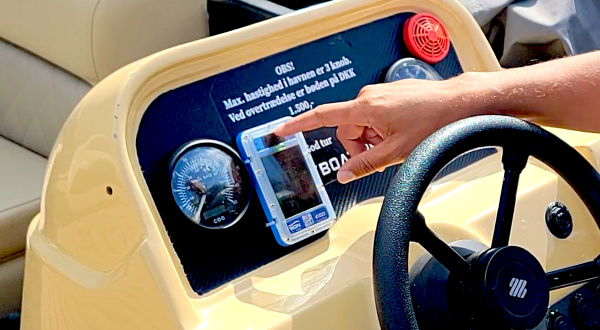
A single owner tracking one boat mostly cares about theft recovery and knowing the boat is safe on its mooring. A rental operator has a completely different problem: dozens of unfamiliar people driving unfamiliar boats through the same stretch of water, day after day, all season.
That changes what actually matters in a tracker. Speed of alert becomes critical, since a renter drifting toward a sandbar needs to be warned in seconds, not minutes. Multi user access becomes necessary, since dock staff, managers, and seasonal employees all need different views and permissions. And multi location support stops being a nice to have the moment you’re running more than one dock or franchise location.
This is also where the cost math changes. For a personal owner, the tracker is mostly insurance against a rare, bad event. For a rental operator, a good tracker prevents dozens of smaller, routine incidents every season, grounding damage, prop strikes, disputes over where a boat actually went, and that adds up to real money saved, not just peace of mind.
What to Look for as a Rental Operator
- Geofencing that acts instantly, not just notifies eventually. The gap between “alert sent” and “renter actually turns around” needs to be seconds, which usually means the device itself needs to trigger a warning, not just send a push notification to the office.
- Multi user roles and permissions. Dock staff need a different view than a manager reviewing the whole fleet. Look for a system that lets you assign access by role.
- Multi location switching. If you run more than one site, or plan to, confirm the platform lets you toggle between locations or view everything on one combined map.
- Returning vessel alerts. Knowing a boat is five to ten minutes from the dock lets staff prep the next rental instead of scrambling once it arrives.
- Integration with your booking and maintenance software. GPS data is far more useful sitting next to your existing rental bookings and service records than living in a separate, disconnected app.
- A subscription model that flexes with your season. Rental businesses are often seasonal, and a system locking you into a full year contract at peak pricing during your slow months is a real cost worth avoiding.
Best Marine GPS Trackers for Rental Operators: In-Depth Reviews
1. WAIV AHOY
Overview
WAIV was built from the ground up around the boat and jet ski rental business, and the AHOY device reflects that. It’s solar powered, wire free to install, and carries an IP68 waterproof rating, with the core differentiator being an on-device siren and strobe system that triggers instantly when a renter crosses a geofence or exceeds a speed limit, even with zero cell coverage at that moment.
Ideal For
- Boat and jet ski rental operators of any size
- Multi location fleets needing one dashboard across every site
- Operators dealing with frequent, unfamiliar renters and repeat grounding or speeding issues
Top Features
- SoundAlertSystem: on-device siren and strobe fire immediately on a geofence or speed violation, independent of network coverage, because the logic runs on the device itself
- Multi site fleet management, letting staff filter to their assigned location or view the entire fleet across all locations
- Team based alerts and permissions, so seasonal staff, dock hands, and managers each see only what’s relevant to their role
- Returning vessel alerts, notifying staff a boat is on its way back so the next rental can be prepped
- Nautical charts with depth data built into geofence drawing, so boundaries can be placed around real shallow water
- Direct integrations with SpeedyDock, BoatClubSoftware, Fleetio, and ActivityDock, plus CSV and GPX export for insurance or performance review
- Bilingual app support (English and Spanish) for mixed language teams
- Capsize and flip over detection with instant text alerts
Why It Stands Out
The instant, offline capable siren is the single biggest differentiator for a rental operation specifically. Most competing systems, even good ones, rely on a phone notification reaching a staff member who then has to physically or verbally intervene, by which point a fast moving PWC has often already caused damage. AHOY warns the renter directly, in the moment, without needing a human in the loop at all.
Pros
- Purpose built around rental operations from day one
- Solar power means fast, low labor installs across an entire fleet
- On-device alerting works even without network coverage
- Deep integrations with existing rental and maintenance software
- No long term contract; subscription flexes for seasonal businesses
- 30 day money back guarantee, with up to five devices returnable even after active use
Cons
- Most valuable at fleet scale; overkill for a single personal boat
- Primarily cellular, so extremely remote offshore add-on coverage would need a separate satellite device
Pricing
Subscription starts at a promotional $12.95 per month per device, with flexible month to month pricing for seasonal operations and fleet discounts available.
Final Verdict
For a rental fleet specifically, this is the most directly purpose built option on the market, and the instant siren alone tends to justify the cost within the first season by preventing even a handful of groundings.
2. BoatFix
Overview
BoatFix combines GPS and geofencing with maintenance monitoring (battery, bilge, engine hours) and backs the whole system with 24/7 live human monitoring, an unusual and genuinely useful model for rental and club operations that don’t want to be staring at an app all day.
Ideal For
- Rental operations and boat clubs that want maintenance data alongside location
- Fleets specifically worried about after hours theft or unauthorized use
Top Features
- Nightwatchman theft mode, calling within seconds if a boat leaves after hours and connecting to law enforcement for recovery
- Proactive geofence warnings as a renter approaches a no-go zone
- Pre and post departure checklists built for rental workflows
- Three tier battery voltage alarms to catch failing batteries before they strand a renter
Why It Stands Out
The live 24/7 monitoring team is a real differentiator. Instead of relying entirely on staff checking an app, BoatFix’s team calls you directly when something serious happens.
Pros
- Live human monitoring around the clock
- Strong maintenance data alongside GPS
- Rental specific tools like departure checklists
- Roughly ten minute base install
Cons
- Pricing isn’t published; requires a sales call
- No published wire free or solar option
Pricing
Subscription based; contact BoatFix directly for a fleet quote.
Final Verdict
A strong option if you want a live team backing up your alerts, particularly for clubs concerned about after hours access.
3. Sensar Marine
Overview
Sensar Marine’s fleet solution builds on its hardwired Boat Monitor hardware, adding a dashboard that shows an entire fleet on one map along with digital trip logs and impact detection for each vessel, useful for reviewing what happened after a rough day on the water.
Ideal For
- Fleets wanting detailed trip history and impact logging alongside location
- Rental and dealer operations offering GPS as a value add on demo or rental boats
Top Features
- Fleet wide dashboard regardless of vessel location
- Digital trip log capturing route, speed, and impact data like a flight recorder
- Uniquely shaped geofences with email or text alerts on entry or exit
- Insurance friendly incident documentation from impact and route data
Why It Stands Out
The trip log and impact data give operators a clear record after an incident, useful for insurance claims or settling disputes about where a boat actually went and what happened.
Pros
- Strong post incident documentation via trip logs and impact data
- Doesn’t meaningfully drain boat batteries
- Fleet dashboard covers boats regardless of location
Cons
- Geofence alerts only fire after the boat has been stationary for about 15 minutes, which limits its use for stopping an in-progress violation
- Hardwired install required across every boat in the fleet
- $399 per device before subscription costs
Pricing
Around $399 per device plus an ongoing subscription covering cloud data and alerts.
Final Verdict
Better suited to after the fact documentation and maintenance tracking than to stopping a violation as it happens in real time.
4. Capturs
Overview
Capturs is a France based tracker built specifically around rental and equipment fleets, covering boats, canoes, kayaks, dinghies, and even outboard motors individually. It’s a useful name to know for operators running mixed fleets or based outside the U.S.
Ideal For
- Operators running mixed fleets beyond just powerboats, including kayaks, canoes, and dinghies
- International rental operations, particularly in Europe
Top Features
- Zone entry and exit alerts via SMS or email
- Usage reporting exportable to Excel, GPX, or via API to third party systems
- Long battery life devices requiring no boat infrastructure
- Designed to track individual equipment, not just powered vessels
Why It Stands Out
Its ability to track non-powered equipment like kayaks and dinghies individually is uncommon among marine trackers, most of which assume a boat with its own electrical system.
Pros
- Covers a wider range of equipment types than most competitors
- No boat infrastructure required for most devices
- Flexible data export for reporting and integration
Cons
- Less established in the U.S. rental market compared to WAIV or BoatFix
- Pricing not published; requires direct contact
- Feature depth around live, instant alerting is less documented than WAIV’s on-device siren system
Pricing
Contact Capturs directly for pricing based on fleet size and equipment mix.
Final Verdict
Worth evaluating specifically if your fleet includes non-powered equipment like kayaks or paddle craft alongside boats.
5. Siren Marine MTC
Overview
Siren’s MTC platform includes fleet capable geofencing and battery monitoring, though its core strength, remote control of onboard systems like lights and A/C, is more relevant to docked personal boats than active rental turnover.
Ideal For
- Smaller rental fleets of higher value powerboats that also want remote system control
Top Features
- GPS, geofencing, and battery monitoring as standard
- Expandable sensor lineup for bilge, temperature, and entry
- Remote control features for connected onboard systems
Why It Stands Out
The remote control layer is unusual, though it matters less for a rental fleet cycling through renters quickly than it does for a single owner’s docked boat.
Pros
- Standard GPS and battery monitoring included
- Expandable sensor ecosystem
- Global cellular connectivity
Cons
- Limited multi location and rental specific fleet tools compared to purpose built rental platforms
- Hardwired install required
- Alerts are notification based rather than instant, on-device warnings
Pricing
Device cost varies by kit; service plans run around $17.97 monthly, $125 seasonally, or $180 annually.
Final Verdict
A reasonable option for a small fleet of higher end boats, less suited to high turnover rental operations than the purpose built alternatives above.
How to Choose the Right System for Your Fleet
Prioritize alert speed over alert quantity.
A system that sends you fifteen different notification types but takes ninety seconds to fire any of them is less useful than one that reacts instantly to the one alert that actually matters: a boat about to run aground.Map your fleet’s actual size and locations first
A single dock with five boats has very different needs than three locations with fifty boats between them. Confirm any system you’re considering actually scales cleanly to your real footprint, not just a demo fleet.Check what happens without network coverage
Rental waters often include some dead zones. Ask directly whether geofence alerts still fire without a live connection at that moment, since this is where systems genuinely differ.Factor in your existing software stack
If you already use SpeedyDock, Fleetio, BoatClubSoftware, or a similar platform, a tracker that integrates directly saves real administrative time compared to running GPS data in a completely separate system.Ask about seasonal pricing before you commit
Many rental operations run at full capacity for a few months and near zero the rest of the year. A subscription that can flex down (or pause) during the off season protects your margins in a way a rigid annual contract doesn’t.Get the maintenance and documentation features you’ll actually use
If disputes over damage or route are common in your business, prioritize systems with strong trip logs and exportable data, useful for both insurance claims and settling disagreements with renters.
Calculating the Real Cost of Not Tracking Your Fleet
It’s worth running the numbers on what a single bad incident actually costs before deciding a tracker is an unnecessary expense.
A grounding that bends a lower unit or damages a hull can easily run into several thousand dollars in repair costs, plus the lost rental revenue while that boat is out of service. A jet ski that capsizes and takes on water without anyone noticing for even twenty or thirty minutes can suffer serious engine damage from water ingress. A single after hours theft, if the boat isn’t recovered quickly, can mean a total loss.
Compare that against a device subscription running somewhere between $15 and $40 a month per unit. Even accounting for the cost of outfitting an entire fleet, most operators find that preventing one or two incidents a season more than covers the annual cost of the system, before even factoring in the insurance discount many marine insurers offer for boats with active tracking.
Everything You Need to Know
| Category | Key Considerations |
|---|---|
| Best Overall for Rental Fleets | WAIV AHOY — purpose built with instant, offline capable geofence alerts and multi-site management |
| Fastest Geofence Alert | WAIV AHOY — on-device siren fires in seconds even without cell coverage; competitors rely on cloud-based alerts with 30–120 second delays |
| Best for Multi-Location Management | WAIV AHOY — dedicated multi-site dashboard with role-based staff permissions; staff see only their assigned location |
| Best Capsize Detection | WAIV AHOY — patented flip-over detection with instant SMS alert; no other tracker in this guide offers this directly |
| Most Flexible Subscription | WAIV AHOY — no long-term contract, month-to-month pricing for seasonal operators, 30-day money-back guarantee |
| Best for Live Human Monitoring | BoatFix — 24/7 team plus maintenance sensors |
| Best for Documentation and Trip Logs | Sensar Marine — detailed post-incident data including G-force impact logging and route history |
| Best for Mixed Equipment Fleets | Capturs — covers kayaks and non-powered equipment alongside boats |
| Must-Have Fleet Features | Instant geofence alerts, multi-user permissions, multi-location switching, returning vessel alerts |
| Price Range | Roughly $15 to $40 per month per unit across most fleet-capable options |
| Mistake to Avoid | Choosing a system based on feature count alone rather than confirming alerts fire fast enough, and reliably enough, to actually prevent damage |
Get Started with WAIV
Rental operators need more than a location dot on a map. WAIV’s AHOY was built specifically for the reality of running a fleet: unfamiliar renters, seasonal staff, and the constant risk of a grounding turning into an expensive repair bill. The on-device siren, multi location dashboard, and direct integrations with the booking software you already use are all built around that specific problem.
There’s no long term contract, pricing flexes for your season, and every order comes with a 30 day money back guarantee.
FAQs for Rental Operators
What’s the difference between a personal boat tracker and a rental fleet tracker?
Personal trackers mostly focus on theft recovery and location for a single boat. Fleet trackers built for rental operators, like WAIV’s AHOY, add multi user permissions, multi location dashboards, instant on-device alerting to stop violations in progress, and integrations with rental and maintenance software, none of which a single owner typically needs.
How fast do geofence alerts need to be for a rental fleet?
Ideally instant. A renter unfamiliar with local waters can go from safe to aground in well under a minute. Systems that only send a phone notification after data reaches a cloud server introduce a delay, sometimes thirty seconds or more, that can be the difference between a warning that prevents damage and one that arrives too late to matter.
Do rental fleet trackers work without cell coverage?
It depends on the system. WAIV’s AHOY processes geofence boundaries directly on the device, so its siren and strobe fire even with zero cell coverage at the moment of the violation. Systems that rely entirely on cloud based geofence checking stop alerting the moment coverage drops.
Can I manage multiple rental locations from one account?
Yes, with the right platform. WAIV, BoatFix, Sensar Marine, and Capturs all support multi location fleets to varying degrees, letting operators either toggle between sites or view every location on one combined dashboard.
Will a marine GPS tracker actually reduce my insurance costs as a rental operator?
Often, yes. Many marine insurers offer discounts, commonly in the five to fifteen percent range, for fleets with active GPS tracking and monitoring, since it demonstrably reduces theft and, with instant alerting systems, reduces damage incidents too. It’s worth discussing directly with your insurer once a system is in place.
How much does it cost to outfit an entire rental fleet with GPS trackers?
Subscription costs for fleet capable trackers generally run $15 to $40 per month per unit, though some providers offer volume discounts at fleet scale. Device costs vary from effectively free with an active plan up to several hundred dollars per unit for hardwired systems with additional sensors.
What happens if I only run my rental business seasonally?
Look specifically for a provider offering flexible, month to month subscriptions rather than a rigid annual contract. WAIV, for example, allows operators to adjust their subscription level month to month, which matters a lot if your season runs three or four months rather than year round.
